
Barb Wire Fence Replacement Across Brenham Texas: Rural Fencing That Holds Stock.
A landowner weighing Barb Wire Fence Replacement around Brenham Texas is protecting a boundary, a herd or a hay field; cattle, horses, goats and hogs each test a fence in their own way. Barbed wire stays in use on ranches because it is tough, visible and easy to repair in the field; a fence that looks plain can still be carefully built. Decide which side of the line the posts will stand on; small decisions at this stage shape the whole project.
Boundary Fencing for Rural Land: Respecting Both Sides.
Shared fences between neighbors work best when both owners agree on the line and on who will do the upkeep; the fence should sit where the survey says and not where habit suggests. Fence corners that have moved with the soil may need to be reset; water lines move, and the fence has to account for that.
Cattle, Horses and Hogs: Barbs Are Not for Every Animal.
Feral hogs root under fences and may need a low strand pulled close to the ground; a bottom strand set low turns back many small animals. Water gaps at creek crossings need special design so floods do not take the fence away; a hot wire is a useful supplement, not a substitute for good posts.
Setting Wood and Steel: Wood, Steel and Spacing.
Steel T-posts are driven into the ground and are quick to install along a straight line; digging deeper at the corners is the surest investment. Wet areas call for treated wood or steel, since untreated wood rots at the ground line; the crew should test the soil before choosing a post type.
What the Strands Do: Galvanized for the Long Haul.
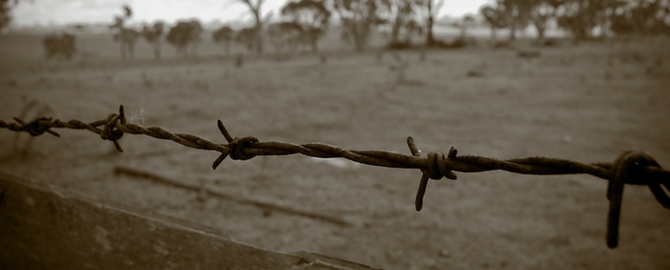
Barbed wire is made of two line wires twisted together, with sharp barbs wrapped around them at set intervals; humid summers wear down thin galvanizing quickly. Barbs are spaced a few inches apart so that every point along the wire discourages stock; spacing patterns differ from ranch to ranch.
Pulling the Wire Tight: Not Too Tight, Not Too Loose.
Splices join two lengths of wire with a tight wrap or a crimped sleeve; a tension gauge removes guesswork on a long run. Barbs should face the side where the stock is kept; the way the wire is fastened tells a lot about the crew.
Ranch Gates: Tractors Need Room.
Chains, latches and locks keep animals and trespassers from opening a gate; choosing the swing direction early prevents trouble later. Gates should be placed where they are needed, at corners, water points and working pens; both types have their place on a working ranch.
Fencing Through Rough Country: Cedar, Yaupon and Vines.
Creek crossings need water gaps that can swing open or wash through in a flood; every obstacle has a solution, and the solution begins with a look. Dry summers crack clay soil and loosen posts; a fence built to local conditions suffers less.
Barb Wire Fence Installation: Posts, Wire and Gates.
Barb wire fence installation starts with clearing the line, locating the corners and setting the braces; the crew should leave the line clean and the gates working. Rain delays are common, since wet ground slows machines and makes clay hard to work; the right equipment turns days into hours.
Looking After a Rural Fence: Tension, Posts and Gates.
Barb wire fence maintenance comes down to walking the line and fixing small problems before animals find them; a short list of tools in the truck keeps the job simple. Hog rooting along the line can undermine posts and wire; rotate through the line on a regular schedule.
Mending Wire, Posts and Gates: Splice, Reset, Rebrace.
Barb wire fence repair begins with finding the break, which can be a snapped strand, a fallen limb, a leaning post or a gate that no longer closes; the cause of the damage should be found as well as the damage itself. Gate hinges that have pulled out of the post are reset in new holes; the repair should match the existing line in height and strand count.
When an Old Fence Reaches the End: Weighing Repair Against Replacement.
Barb wire fence replacement makes sense when posts have rotted, wire has rusted through and corners no longer hold; the old line is a map of where the fence needs to go. Rusted wire breaks without warning, and rotted posts snap at the ground line; the first step is to walk the line with a critical eye.
From a Single Gate to Miles of Wire: One Walk Along the Line.
A request for barb wire fence services can start with a single storm-damaged span or with a whole pasture that needs a new line; the scope should fit the land, the animals and the plan. A good barb wire fence company can show finished fences, braces and gates; a vague proposal leaves room for surprises.
What Crosses and What Stays: Jumpers, Crawlers and Diggers.
Hogs, armadillos and coyotes test the bottom of the fence and look for gaps; many ranches value wildlife and fence design together. Gates left open at certain times let animals move through between pastures; keep gates closed whenever livestock are near.
Ponds, Creeks and Troughs: Openings That Float or Swing.
Wire hung in the path of floodwater collects debris, so the design should let the current pass; check water gaps after every high-water event. Float valves and overflow lines protect the surrounding soil; plan the layout of water before the wire goes up.
Pasture Layout and Cross Fencing: Corners That Link Pastures.
Gates at corners let animals flow around a paddock instead of piling up; each fence in the plan has a job. Portable electric fence helps in a rotation while the permanent line stays strong; leave room to adjust over time.
When to Build: Planning Ahead.
Dry ground makes post holes easier to dig and equipment easier to move, so late summer and fall are popular for building; quiet weeks are a good time to rebuild. Temporary panels can hold stock in one corner while the old line comes down; the herd is the reason for the fence, so protect it during the work.
Dry Weather and the Wire: After the Drought Breaks.
Heavy rain after a dry spell soaks the cracks and swells the soil, which pushes posts out of line; check the corners first when the weather swings. Fire-scorched wood posts can look fine on the outside and be hollow inside; a walk along the line is the first job after the smoke clears.
Ready to Start: Simple Starting Points.
Gather the survey, a rough map of the pasture and a short list of the animals the fence has to hold; nothing more is needed to begin. Reach the team at Brenham Fencing on 979-221-2008 with questions about corners, wire or gates; the details can be sorted out together.